
Can You Use A Projector Outside During The Day: Tips
Yes, you can use a projector outside during the day—but bright sunlight can make the image look washed out, pale, or nearly invisible. A projector works best outdoors in deep shade, under a covered patio, or after sunset.
For daytime viewing in the United States, the key factors are ambient light, projector brightness, screen size, screen surface, and shade. A standard home projector may work for a short presentation under a roof, but it will usually struggle in an open yard under direct sun.
Introduction
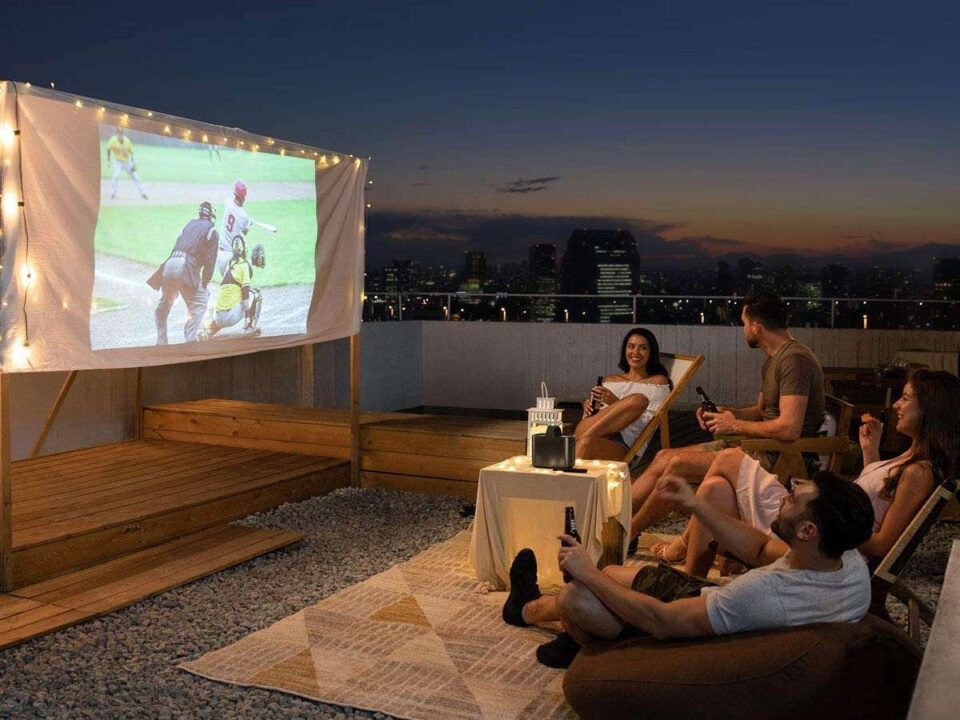
Outdoor projection is popular for backyard movies, sports, presentations, school events, and community gatherings across the United States. The challenge is that a projector must compete with the sun, which is far brighter than indoor room lighting.
If you need a clear image during the day, create as much shade as possible first. Then use a projector with a true brightness rating in ANSI lumens, a smaller image, and a screen designed to reject some ambient light. Even then, the picture may not match the contrast you would get at night.
Can a Projector Work Outside in Daylight?
A projector can work outside during the day if the viewing area is shaded and the projector is bright enough for the screen size. In direct sunlight, however, most home projectors produce a weak image with low contrast.
A projector creates an image by sending light onto a screen. Daylight also reaches that screen. When the room or outdoor area is bright, the reflected daylight competes with the projected light. Black areas become gray because a projector does not usually project “black” light; it creates black by sending little or no light.
This creates three common daytime problems:
- Washed-out colors: Colors lose strength and look pale.
- Weak contrast: Dark scenes become hard to see.
- Glare: Sunlight may reflect from the screen into viewers’ eyes.
Shade makes the biggest difference. A covered porch, garage opening, canopy, or building shadow can improve the image more than simply buying a slightly brighter projector.
Direct sun versus shade
The answer changes greatly based on where the screen sits:
| Outdoor condition | Expected result |
|---|---|
| Direct midday sun | Usually unsuitable for normal movie viewing |
| Bright open shade | Possible with a bright projector and a smaller screen |
| Covered patio or deep shade | Often workable for presentations and video |
| Late afternoon shade | Better, but still lower contrast than night |
| Dusk | Usually good for many home projectors |
| Full darkness | Best image quality and contrast |
A screen placed in direct sunlight may remain difficult to view even with a high-output projector. More brightness helps, but it does not remove the problem of sunlight falling directly on the screen.
How Many Lumens Do You Need for Daytime Outdoor Use?
For daytime outdoor use, look for a projector with a clearly stated ANSI lumen rating. As a rough planning guide, a shaded setup may need about 3,000 to 5,000 ANSI lumens, while direct daylight can require far more light than a typical home projector can provide.
These figures are not guarantees. The needed brightness depends on screen size, shade, screen gain, viewing distance, and the amount of sunlight. A 3,000-lumen projector on a small screen may look better than a 5,000-lumen projector filling a much larger screen.
Practical brightness guide
| Outdoor setup | Practical starting point |
|---|---|
| Nighttime backyard movie | 1,500–3,000 ANSI lumens |
| Deep shade with a using smaller screen | 2,500–4,000 ANSI lumens |
| Bright shade or covered patio | 3,000–5,000 ANSI lumens |
| Partial sun | 5,000 ANSI lumens or more may be needed |
| Direct midday sun | Often impractical for normal consumer projectors |
These ranges are planning estimates, not a universal performance standard. Check whether the manufacturer lists ANSI lumens, ISO lumens, or another measurement. Marketing terms such as “LED lumens” or “light source lumens” may not compare directly with ANSI measurements.
Screen size matters
A larger screen spreads the projector’s light over more area. That makes the image dimmer.
For example, increasing a screen from 80 inches to 120 inches does not create a small brightness penalty. Screen area rises substantially because both the width and height increase. If you want a larger daytime image, you may need:
- A brighter projector
- A higher-gain screen
- More shade
- A smaller viewing area
- A later start time
For daytime use, a 80- to 100-inch image is often easier to see than a 120- to 150-inch image.

How to Make a Projector Visible Outside During the Day
The most effective way to use a projector outdoors during the day is to reduce sunlight before increasing projector brightness. Use this setup order.
1. Create deep shade
Place the screen and viewers under a covered patio, canopy, tent, pavilion, or large shade structure. The screen should remain shaded throughout the event, not just at the beginning.
Avoid placing the screen where sunlight can hit it from the side. Side light can still reduce contrast and create glare. If possible, use dark side panels or curtains to block stray light.
Do not fully enclose a projector in fabric unless the manufacturer allows it. Projectors release heat, and blocked vents can cause overheating.
2. Choose a smaller screen
Use the smallest screen that still suits the audience. A smaller image concentrates more of the projector’s light and usually looks brighter.
If you are showing a presentation, reduce the image size until text becomes clear. For a movie, sit closer rather than enlarging the image too much.
3. Use a proper projection screen
A white wall, sheet, or tarp may work at night, but it is usually a poor choice in daylight. Household fabrics can absorb light, create wrinkles, and scatter the image unevenly.
A dedicated screen can provide:
- A more uniform surface
- Better color accuracy
- Less light loss
- Fewer wrinkles
- More predictable viewing angles
An ambient-light-rejecting screen may help in some shaded setups. These screens are designed to reflect more projector light toward viewers while reducing light from certain directions. They are not magic, though. Their performance depends on the screen angle, projector position, and direction of the sunlight.
4. Increase image contrast
Use a high-contrast video mode if the projector offers one. You can also improve visibility by:
- Choosing content with large text
- Avoiding dark scenes
- Raising subtitle size
- Using bright graphics
- Lowering the screen size
- Positioning the screen away from reflective surfaces
For presentations, a dark text-on-light background or bright white text on a dark background may work better than thin colored text.
5. Position the projector correctly
Keep the projector level and centered with the screen when possible. Excessive digital keystone correction can reduce image quality and may make text less sharp.
Use optical zoom or physical placement rather than extreme digital scaling. Leave clear space around the projector’s air vents, and keep the lens free from dust, pollen, and moisture.
What Type of Projector Is Best for Daytime Outdoor Use?
A bright, full-size home theater or business projector is usually better for daytime outdoor use than a small portable projector. Portable models are convenient, but many sacrifice brightness to reduce size, weight, noise, and power use.
Standard lamp projectors
Lamp-based projectors can offer strong brightness and may cost less than some high-output laser models. Their limitations can include:
- Lamp replacement over time
- Heat output
- Longer warm-up and cool-down periods
- Greater care during transport
Never move a hot lamp projector until it has completed its cool-down cycle.
LED projectors
LED models often start quickly and require less routine lamp maintenance. Many compact LED projectors, however, have modest brightness. They can work well at night or in deep shade but may struggle in bright daytime conditions.
Laser projectors
Laser projectors can offer high brightness, quick start-up, and long light-source life. They may be useful for frequent outdoor presentations or large events, but they tend to cost more.
The light source alone does not determine daytime performance. A bright LED projector can outperform a dim laser projector. Compare the actual brightness rating, image size, warranty, and operating limits.
What to check before buying
Look for:
- A brightness rating in ANSI lumens or another clearly defined standard
- Native resolution suitable for your content
- Manual focus or reliable autofocus
- Horizontal and vertical placement options
- Adequate cooling
- HDMI input or the wireless feature you need
- A stated operating temperature range
- A replaceable filter if the model uses one
- A design suitable for transport
Do not assume that a projector labeled “outdoor” is weatherproof. In many cases, “outdoor” describes the intended use, not protection from rain, dust, or condensation.
Can You Use a Projector Outside Without a Screen?
You can project onto a wall, garage door, sheet, or smooth outdoor surface, but the result depends on the surface color, texture, and reflectivity. A dedicated screen usually gives a cleaner and brighter image.
A plain white wall may work if it is smooth and shaded. A rough wall can distort the image. A dark wall absorbs more light, while a glossy surface can create hot spots and glare.
A bedsheet is a common low-cost option, but it has several limits:
- Wrinkles can bend the image.
- Thin fabric may let light pass through.
- Wind can shake the picture.
- Uneven fabric can reduce sharpness.
- White fabric may not reflect light evenly.
If you use a sheet, stretch it tightly and secure it against wind. Never attach it in a way that creates a trip hazard or blocks an exit.
Does a Projector Need to Be Covered Outside?
Yes. Protect the projector from rain, sprinklers, dew, dust, insects, and sudden temperature changes. Most consumer projectors are not designed to operate in wet conditions.
A cover can block direct water when the projector is off, but it must not block the cooling vents during use. A safer approach is to place the projector under a roof or canopy with plenty of open space around it.
Follow the manual’s instructions for:
- Operating temperature
- Storage temperature
- Humidity
- Vent clearance
- Transport
- Cleaning
- Condensation
If the projector moves from an air-conditioned room into hot, humid air, condensation may form on the lens or inside the unit. Give it time to reach room temperature before turning it on.
If rain begins, turn off the projector, unplug it safely, and move it to a dry place. Do not handle electrical plugs with wet hands or while standing in water.

How to Power a Projector Safely Outside
Use a properly rated outdoor extension cord and connect equipment to a GFCI-protected outlet. A GFCI, or ground-fault circuit interrupter, helps reduce the risk of electric shock when electricity is used near moisture.
Before setup:
- Check the projector’s power requirements.
- Use an outdoor-rated cord that is long enough without being stretched.
- Keep connections off the ground.
- Protect plugs from rain and sprinkler spray.
- Do not run cords across walkways without securing and marking them.
- Keep cords away from hot surfaces, lawn equipment, and standing water.
- Follow local electrical rules and event-site requirements.
Do not connect many high-power devices to one small extension cord. Speakers, lights, streaming devices, and a projector can add up quickly. If the setup is large, permanent, or used at a public event, ask a licensed electrician or event professional to review the power plan.
A portable power station may run some projectors, but battery life depends on the station’s usable watt-hours and the projector’s actual power draw. A simple estimate is:
Runtime in hours ≈ usable watt-hours ÷ device watts
For example, a power station with 500 usable watt-hours running a 100-watt projector might provide about five hours under ideal conditions. In practice, inverter losses and the power used by connected devices reduce that time.

Common Daytime Outdoor Projector Problems
The image looks gray or faded
Likely causes:
- Too much sunlight
- A screen that is too large
- Low projector brightness
- A low-quality or thin screen
- Incorrect picture mode
What to try:
- Add shade around the screen.
- Reduce the image size.
- Move the event closer to dusk.
- Use a brighter picture mode.
- Replace a sheet with a proper screen.
The picture is bright but not sharp
Likely causes:
- The projector is out of focus.
- The surface is wrinkled or uneven.
- Digital keystone correction is excessive.
- The projector is too far from the screen.
- Heat or dust is affecting the lens.
What to try:
- Focus the lens after the projector warms up.
- Center the projector with the screen.
- Reduce keystone correction.
- Use a smooth, tight screen.
- Clean the lens according to the manual.
The projector shuts down
Likely causes:
- Blocked air vents
- Excessive heat
- Dirty filters
- An unsuitable outdoor temperature
- An unstable power supply
What to try:
- Move the projector into open shade.
- Leave the required space around the vents.
- Clean or replace filters if the manual allows it.
- Stop using the projector in extreme heat.
- Check the power cord and outlet.
Do not keep restarting a projector that shuts down from overheating. Let it cool and find the cause first.
Is a TV Better Than a Projector for Daytime Outdoor Viewing?
A television is usually better for daytime viewing because its display produces light directly toward the viewer. A projector must send light to a screen and compete with daylight reflected from that screen.
Choose a TV when:
- The viewing area is bright.
- You need strong contrast at midday.
- The screen will stay outside for long periods.
- The audience is small or close to the display.
- You want simple setup.
Choose a projector when:
- You can control the shade.
- You want a larger image.
- You plan to watch mainly at dusk or night.
- The equipment must be packed away after use.
- A cinematic, large-screen experience matters more than midday brightness.
A TV also has outdoor safety limits. Do not use a regular indoor TV where it can get wet, and do not leave electronics outside in changing weather unless they are specifically designed for that environment.
Daytime Outdoor Projector Setup Checklist
Use this checklist before the event:
- The screen is in deep shade.
- The projector has enough ANSI-rated brightness for the image size.
- The screen is smooth, tight, and secure.
- The projector has clear airflow.
- The lens is clean and focused.
- The power outlet has GFCI protection.
- Outdoor-rated cords are kept dry and secured.
- Streaming or HDMI equipment works before guests arrive.
- Speakers are positioned safely and tested.
- The weather forecast is suitable.
- A backup plan is ready if rain or strong wind arrives.
Test the setup at the same time of day as the planned event. A picture that looks good at 7 p.m. may be difficult to see at 2 p.m.
Frequently Asked Questions
Can a 1,000-lumen projector work outside during the day?
It may work in deep shade with a small image, but it will usually struggle in bright outdoor conditions. It is more suitable for nighttime viewing, presentations under cover, or heavily shaded areas.
Can you use a projector in direct sunlight?
Technically, the projector can operate, but the image may be too washed out to enjoy. Direct sunlight on the screen is the main problem. Move the screen into shade or wait until the sun is low.
Is 3,000 lumens enough for an outdoor projector?
It can be enough for a small or medium screen in deep shade. It may not be enough for a large screen, bright shade, or partial sun. Screen size and sunlight matter as much as the brightness number.
Can I use a white sheet as a projector screen during the day?
You can, but it may produce a dim or uneven image. A tight, opaque, dedicated screen normally gives better results, especially when daylight is present.
Will heat damage an outdoor projector?
High heat can cause thermal shutdown and may shorten component life. Keep the projector within the operating range listed in its manual, provide airflow, and avoid enclosing it in a small box or covered container.
Conclusion
You can use a projector outside during the day, but the setup must control sunlight. For the best result, place the screen in deep shade, use a smaller image, choose a projector with a genuine brightness rating, and provide safe power with GFCI protection.
If the screen must sit in direct sun, a television or commercial high-brightness display is usually the more practical choice. For most backyard movie nights, waiting until dusk remains the simplest way to get a bright, clear picture.

Everett Calloway is a consumer electronics writer and technology enthusiast at ElectroDoz. He enjoys exploring the latest gadgets, electronic devices, and innovative technologies that make everyday life easier. Everett focuses on creating helpful product reviews, detailed buying guides, practical how-to articles, and troubleshooting tips. His goal is to simplify complex technical information and help readers understand product features, compare their options, and make informed purchasing decisions. When he isn’t researching new electronics, he enjoys exploring emerging technology trends and discovering useful gadgets.