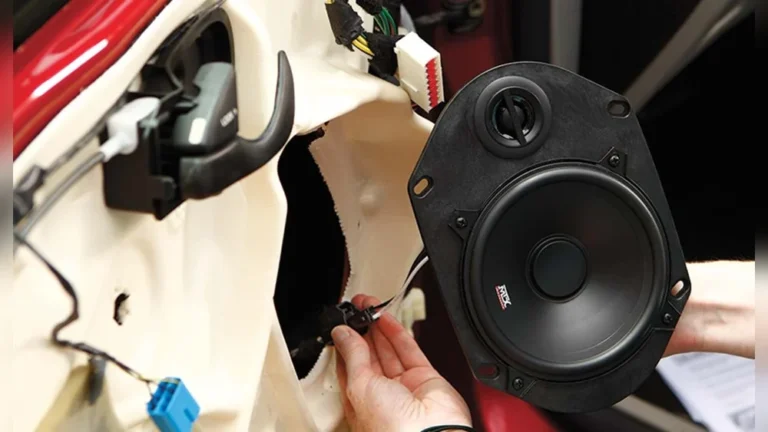

Can A Car Subwoofer Be Used For Home Theater: Easy Guide
Yes, a car subwoofer can be used for home theater, but it usually needs extra equipment. A passive car subwoofer needs a suitable amplifier and a safe power supply. A powered car subwoofer may also need a 12-volt power system and a way to accept the home theater receiver’s subwoofer signal.
For most U.S. homes, a powered home theater subwoofer is easier, safer, and more efficient. Still, a car subwoofer can work well when you already own one and are willing to match the amplifier, power supply, enclosure, and wiring.

What makes a car subwoofer different from a home theater subwoofer?
A car subwoofer and a home theater subwoofer do the same basic job: they turn an audio signal into low-frequency sound. The main differences are their design goals, power systems, enclosure needs, and signal connections.
Car subwoofers are built for a small vehicle cabin. A car gives the subwoofer help through cabin gain. Very low notes can seem louder inside a car than they would in a large room.
Home theater subwoofers are built for larger spaces. They usually include a built-in amplifier, a line-level input, a volume control, and a crossover. Many also include automatic standby and protection circuits.
Key differences
| Feature | Car subwoofer | Home theater subwoofer |
|---|---|---|
| Normal power source | 12-volt vehicle electrical system | Standard U.S. AC outlet |
| Amplifier | Often separate | Usually built in |
| Common signal | Car stereo or car amplifier | Receiver LFE or subwoofer output |
| Enclosure | May be sold separately | Usually included and matched |
| Room design | Small vehicle cabin | Larger, open home room |
| Setup difficulty | Moderate to high | Usually low to moderate |
A car subwoofer is not automatically weaker or worse. It is simply made for a different system. The driver, box, amplifier, and room must work together.

Can a passive car subwoofer work with a home theater receiver?
A passive car subwoofer can work with a home theater receiver, but you normally cannot connect it directly to the receiver’s subwoofer output.
The subwoofer output on most receivers is a low-power line-level signal. It tells an amplifier what bass to play. It does not usually provide enough power to drive a passive subwoofer.
You need a separate subwoofer amplifier between the receiver and the car subwoofer.
Basic signal path
Home theater receiver LFE/Sub Out
        ↓
Subwoofer amplifier input
        ↓
Subwoofer amplifier speaker output
        ↓
Car subwoofer
The receiver sends the bass signal through an RCA cable. The external amplifier increases that signal to a level that can move the subwoofer cone.
What the amplifier must match
Check these four specifications before buying or using an amplifier:
- Nominal impedance: Usually 2, 4, or 8 ohms.
- Continuous power rating: Often called RMS power.
- Amplifier input type: RCA, speaker-level, or both.
- Crossover control: A low-pass filter is useful for bass-only playback.
The amplifier’s stable impedance rating must match the subwoofer. Connecting a 2-ohm car subwoofer to an amplifier that only supports 4 ohms can cause overheating, shutdown, or damage.
Do not match equipment by peak watts alone. Peak ratings are brief and may use different test methods. RMS or continuous ratings are more useful for system planning.

Can a powered car subwoofer be used at home?
A powered car subwoofer can be used at home only if its electrical and audio connections are compatible.
The main problem is power. A car amplifier expects roughly 12 to 14.4 volts DC. A U.S. wall outlet supplies about 120 volts AC. You cannot plug a car subwoofer into a wall outlet unless it has a built-in AC power supply designed for that purpose.
You need a properly rated 12-volt DC power supply. The supply must provide enough current for the amplifier at its expected output level.
Example current calculation
This is a hypothetical example:
- Amplifier output: 500 watts
- Estimated efficiency: 80 percent
- Supply voltage: 12 volts
Estimated input current:
500 watts ÷ 0.80 ÷ 12 volts ≈ 52 amps
Music does not demand full power all the time, but the power supply still needs enough capacity for brief peaks. A small 12-volt adapter may shut down or become dangerously hot.
A suitable power supply should have:
- The correct output voltage
- Enough continuous current
- Enough peak capacity
- Short-circuit protection
- Overcurrent protection
- Properly rated terminals and wiring
- Good ventilation
A car battery is not a good long-term indoor power solution. It can release gas, spill acid, deliver very high fault current, and create a fire risk. Do not charge or operate a vehicle battery indoors as a casual substitute for a power supply.

How to connect a car subwoofer to a home theater system
The correct method depends on whether the subwoofer is passive or powered.
Method 1: Passive car subwoofer with a home audio amplifier
You will need:
- Home theater receiver with a subwoofer or LFE output
- External mono subwoofer amplifier
- Passive car subwoofer
- RCA cable
- Speaker wire
- Enclosure suitable for the subwoofer
- Optional line-level ground-loop isolator if noise occurs
Steps
- Read the subwoofer label. Find its impedance and continuous power rating.
- Choose a stable amplifier. Confirm that the amplifier supports the subwoofer’s impedance.
- Connect the receiver. Run an RCA cable from the receiver’s subwoofer output to the amplifier’s input.
- Connect the subwoofer. Use the correct speaker terminals and observe positive and negative polarity.
- Set the low-pass filter. Start near 80 Hz if the receiver does not already manage the crossover.
- Set gain low. Raise it slowly during system calibration.
- Run the receiver’s room setup. Use the receiver’s automatic calibration system if available.
- Check for heat or clipping. Stop if the amplifier becomes unusually hot, shuts down, or sounds harsh.
Never connect the speaker output of one amplifier to the speaker output of another amplifier. That can damage both devices.
Method 2: Powered car subwoofer with an external 12-volt supply
You will need:
- Powered car subwoofer or car amplifier and subwoofer
- Properly rated 12-volt DC power supply
- Home theater receiver with an LFE or subwoofer output
- RCA cable or a suitable signal converter
- Correct DC wiring and fuse protection
Steps
- Place the subwoofer where it has airflow.
- Keep the 12-volt supply within its safe current rating.
- Connect the receiver’s subwoofer output to the car amplifier’s signal input.
- Connect the positive and negative DC supply leads correctly.
- Add protection according to the amplifier maker’s wiring instructions.
- Turn the gain and bass boost down before testing.
- Play a familiar bass track at low volume.
- Check for hum, distortion, heat, and shutdown.
- Calibrate the receiver after the system works at a basic level.
If the powered subwoofer uses a remote-turn-on wire, the amplifier may not start until that wire receives a trigger voltage. Some car amplifiers need a separate switch or a suitable 12-volt trigger solution.

What enclosure does a car subwoofer need for home theater?
The enclosure can change the sound as much as the driver itself. A car subwoofer should use the sealed or ported box type recommended for that driver.
A sealed enclosure is usually easier to use in a home system. It has a simpler design and can provide controlled bass. A ported enclosure can produce more output near its tuning frequency, but the port size and tuning must be correct.
Do not place a bare car subwoofer on a shelf and expect normal performance. The driver needs an enclosure that controls the air behind the cone. Without one, the cone may move too far, sound weak, or suffer damage.
Sealed versus ported enclosures
| Enclosure type | Main benefit | Main risk |
|---|---|---|
| Sealed | Simple, controlled response | May need more amplifier power |
| Ported | More output around the tuned range | Wrong tuning can cause excessive cone movement |
| Bandpass | Can produce strong output in a narrow range | Harder to design and less flexible |
| Vehicle-specific box | Often fits the car well | May not suit a home room or placement |
A car box may also be too small for a large room. The subwoofer can still work, but it may not produce the depth or volume you expect from a dedicated home theater subwoofer.
The enclosure must also be secure. A heavy driver can vibrate across a floor or shelf. Use a stable position and keep the front of the driver and any port opening clear.

How much power does a car subwoofer need at home?
The right amplifier power depends on the subwoofer’s impedance, continuous rating, enclosure, and listening goals.
As a general planning rule, an amplifier with power near the subwoofer’s continuous rating is a reasonable starting point. Some systems use more or less power. The important part is that the amplifier remains stable at the connected impedance and does not clip.
Example
Suppose a car subwoofer has these ratings:
- 4-ohm impedance
- 300-watt continuous rating
- 600-watt peak rating
A suitable amplifier might provide about 250 to 350 watts into 4 ohms. That does not mean a larger amplifier is always unsafe. It means the gain must be set with care, and the system must avoid excessive cone movement and clipping.
A smaller amplifier can also damage a subwoofer if it clips badly. Clipping sends a distorted signal to the driver and can create excess heat.
Watch for these warning signs
- Harsh or fuzzy bass
- A clicking or popping cone
- The cone moving very far
- Burning smells
- Amplifier shutdown
- Power supply shutdown
- Loud mechanical noise
- Bass that disappears at higher volume
Stop playback when any of these signs appear. Lowering the gain may solve the problem, but repeated shutdowns can mean the amplifier, power supply, wiring, or enclosure is incorrectly matched.
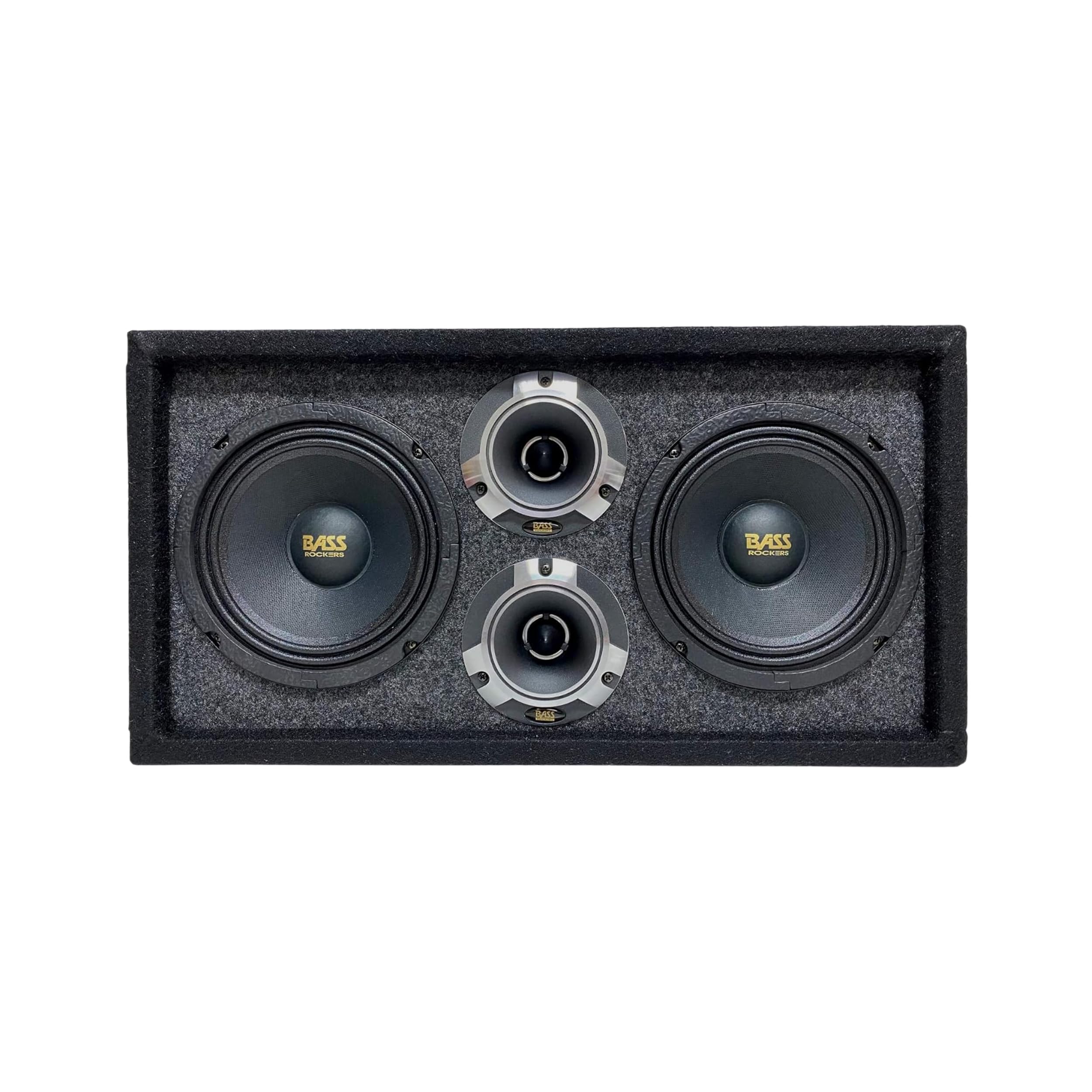
Does a car subwoofer sound good in a home theater?
It can sound good, but the result depends more on system matching than on the word “car” on the label.
A car subwoofer may deliver strong bass in a small room. In a large living room, it may run out of output sooner than a home theater subwoofer designed for that space. The room also creates peaks and dips that can make bass sound boomy in one seat and weak in another.
The subwoofer’s frequency response matters too. A driver built for strong mid-bass in a vehicle may not reproduce the deepest home theater effects as well as a purpose-built low-frequency subwoofer.
Factors that affect the result
- Driver size
- Enclosure type and volume
- Port tuning
- Amplifier power
- Room size
- Subwoofer placement
- Crossover setting
- Listening distance
- Receiver calibration
- Desired playback level
A car subwoofer often makes the most sense as a budget project, a temporary setup, or a way to reuse equipment you already own. It makes less sense when you must buy a new amplifier, a large power supply, an enclosure, wiring, and safety hardware. At that point, a powered home theater subwoofer may cost less and take less time.

How should you set the crossover and gain?
Start with low gain and make small changes. The receiver and the external amplifier should not both boost bass aggressively.
If the receiver controls the crossover, set the external amplifier’s low-pass filter high enough to avoid cutting off useful bass, or disable the amplifier’s crossover if that option exists. If the receiver does not manage the crossover, start near 80 Hz and adjust by ear.
A common starting setup is:
- Low-pass crossover: about 80 Hz
- Bass boost: Off
- Gain: Low
- Phase: 0 degrees
- Receiver subwoofer level: Near its normal calibration range
The correct crossover depends on the main speakers. Small satellite speakers may work better with a higher crossover. Larger speakers may blend better with a lower setting.
Check the phase
If the bass sounds weak near the crossover point, try the amplifier’s phase control or a 0/180-degree switch if available. The better setting is the one that creates smoother bass at the main listening seat.
Avoid excessive bass boost
Bass boost uses extra amplifier power and can push the driver beyond its safe movement range. It may make a small system sound louder for a short time, but it also raises the chance of distortion and damage.

Common problems when using a car subwoofer at home
Most problems come from power, signal, impedance, or enclosure errors.
| Symptom | Likely cause | First check |
|---|---|---|
| No sound | No amplifier, wrong input, or missing turn-on signal | Check signal path and amplifier status |
| Loud hum | Ground-loop or poor signal connection | Test cables and use proper isolation if needed |
| Amplifier shuts down | Too much current demand or low impedance | Check load and power supply rating |
| Weak bass | Wrong enclosure, polarity, or placement | Check wiring and move the subwoofer |
| Harsh bass | Clipping or too much gain | Lower gain and bass boost |
| Rattling | Loose parts or excessive excursion | Inspect the box and reduce volume |
| Power supply becomes hot | It is overloaded or poorly ventilated | Stop use and check its rating |
Do not solve a hum by removing the safety ground from an AC plug. That can create a shock hazard. Use properly grounded equipment and a correctly designed audio isolator when necessary.
Do not guess at DC polarity. Reversed power connections can destroy a car amplifier or power supply. Check the labels and wiring instructions before applying power.

Is using a car subwoofer for home theater worth it?
Using a car subwoofer is worthwhile when you already have the driver, enjoy DIY work, and can provide the correct amplifier and power system.
It is usually not the best route if you want a quick, clean installation. A powered home theater subwoofer already includes the amplifier, enclosure, AC power supply, input controls, and protection features.
Choose a car subwoofer when:
- You already own the subwoofer
- You can identify its impedance and power rating
- You have space for the enclosure
- You understand amplifier and DC power requirements
- You want a DIY project
- You accept that performance may vary by room
Choose a home theater subwoofer when:
- You want simple plug-and-play setup
- You do not own a suitable amplifier
- You do not want to build or modify an enclosure
- You need reliable low-frequency output
- You want built-in room and safety features
- You want to avoid a high-current 12-volt power system
The lowest purchase price is not always the lowest total cost. Add the amplifier, enclosure, power supply, cable, fuse, and your time before comparing the two options.

Safety checklist for a car subwoofer in a house
Follow these precautions before connecting the system:
- Do not connect a 12-volt car amplifier directly to a 120-volt wall outlet.
- Use a DC power supply with the correct voltage and current rating.
- Keep high-current wiring insulated and protected.
- Use the fuse size and location recommended by the amplifier maker.
- Do not use damaged cables, loose terminals, or exposed conductors.
- Provide airflow around the amplifier and power supply.
- Keep the system away from water, heat, and flammable items.
- Do not operate a loose car battery indoors.
- Keep children and pets away from exposed power terminals.
- Disconnect power before changing speaker wiring.
- Stop immediately if you smell burning insulation or overheated electronics.
If you are unsure about AC wiring, high-current DC wiring, or grounding, ask a qualified electrician or audio installer. A low-voltage label does not make a high-current system risk-free.

Frequently asked questions
Can I connect a car subwoofer directly to an AV receiver?
Usually, no. A passive car subwoofer needs a separate amplifier. The receiver’s subwoofer output is normally a signal output, not a powered speaker output.
Can I use a computer power supply to run a car subwoofer amplifier?
Sometimes, but only if its voltage, current capacity, startup behavior, connectors, and protection systems are suitable. Many computer power supplies are not convenient or safe for this use without proper wiring. A purpose-built 12-volt supply is usually easier to evaluate.
Can I use a car subwoofer without an enclosure?
You can briefly test a driver, but normal use requires a suitable enclosure. The box controls cone movement and shapes the bass response.
Will a car subwoofer damage my home theater receiver?
Not when it connects through the receiver’s line-level subwoofer output and a correctly matched external amplifier. Damage becomes more likely when speaker outputs are connected incorrectly or when the amplifier presents an unsafe load.
Can I use a car amplifier with a home theater receiver?
Yes. The amplifier needs a compatible input signal, a correctly rated 12-volt DC power source, suitable wiring, and often a remote-turn-on solution. The installation is more involved than using a home subwoofer amplifier.
Final answer
A car subwoofer can be used for home theater, but it is not a direct plug-in replacement for a home subwoofer. A passive model needs a compatible amplifier and enclosure. A powered car model needs a properly rated 12-volt DC power supply, signal connection, and safe wiring.
For a reuse or DIY project, it can be a sensible choice. For the simplest and most reliable U.S. home theater setup, a powered home theater subwoofer is usually the better option. Before connecting anything, confirm the subwoofer’s impedance, continuous power rating, enclosure needs, and the amplifier’s power and electrical requirements.

Everett Calloway is a consumer electronics writer and technology enthusiast at ElectroDoz. He enjoys exploring the latest gadgets, electronic devices, and innovative technologies that make everyday life easier. Everett focuses on creating helpful product reviews, detailed buying guides, practical how-to articles, and troubleshooting tips. His goal is to simplify complex technical information and help readers understand product features, compare their options, and make informed purchasing decisions. When he isn’t researching new electronics, he enjoys exploring emerging technology trends and discovering useful gadgets.