Can I Use A Bass Amp As A Subwoofer: What To Know
Yes, you can use some bass amps as a makeshift subwoofer, but a bass amp is not the same as a dedicated powered subwoofer. A bass amp may add useful low-end sound for a small room, rehearsal space, or casual music setup. However, it may not play the deepest bass, spread sound evenly, or handle subwoofer duty as safely and cleanly as a proper PA sub.
For readers in the United States, the key issue is not the country or power standard. It is the amp type, speaker design, frequency range, power rating, and connection method. A bass combo amp, bass amp head, powered speaker, and passive speaker cabinet all work in different ways.

Quick answer: When can a bass amp work as a subwoofer?
A bass amp can work as a basic low-frequency speaker when all of these conditions are met:
- It is a powered bass combo or powered bass cabinet.
- It has enough low-frequency response for your use.
- You connect it through a safe line-level or instrument-level input.
- You keep the volume and bass controls within the amp’s limits.
- You do not expect the output of a dedicated PA subwoofer.
A bass amp usually does not make a good subwoofer when:
- It is only an unpowered bass amp head.
- You connect an amp output to another amp’s input.
- The cabinet has a small speaker with limited low-end output.
- You need strong bass for a DJ event, live show, movie system, or large room.
- You need a crossover that sends bass only to the subwoofer.
A simple rule helps:
A bass amp can reproduce bass, but it is not automatically designed to reproduce subwoofer bass.

What is the difference between a bass amp and a subwoofer?
A bass amp is made to amplify an electric bass guitar. A subwoofer is made to reproduce low-frequency sound from a full-range audio system.
The two devices may cover some of the same frequencies, but their goals differ.
| Feature | Bass amp | Powered subwoofer |
|---|---|---|
| Main purpose | Amplify a bass guitar | Reproduce low bass in a sound system |
| Typical input | Instrument or line input | Line input, often balanced |
| Sound character | May add tone and color | Usually aims for controlled low bass |
| Crossover | Often absent or limited | Commonly built in |
| Cabinet design | Made for player monitoring | Made for high output and low extension |
| Common control | Gain, bass, mid, treble, master | Level, crossover, polarity, sometimes EQ |
| Best use | Bass guitar and personal monitoring | PA, DJ, music playback, home theater |
The term subwoofer usually means a speaker dedicated to the lowest part of the audio range. Many subwoofers are designed to work with a crossover. A crossover sends low frequencies to the sub and sends the rest of the signal to the main speakers.
Most bass amps do not provide this full system function. They simply amplify the signal and send it to their speaker.
How low can a bass amp play?
The lowest note on a standard four-string bass is about 41 Hz, or E1. A five-string bass usually reaches about 31 Hz, or B0. That does not mean every bass amp produces those notes at the same volume.
A bass amp’s real low-end performance depends on:
- Speaker size
- Cabinet volume
- Port design
- Amplifier power
- Built-in filters
- Room placement
- Volume level
- The speaker’s safe excursion limit
A small bass combo may produce useful sound around the low notes of a bass guitar but lose strength below that range. A larger cabinet with a 15-inch speaker may move more air, but speaker size alone does not prove that it can reproduce very deep bass.
A dedicated subwoofer may be designed to reach below the range needed for most bass guitar notes. It also usually has a cabinet, amplifier, limiter, and crossover designed for high low-frequency output.
Why frequency response numbers can mislead
Manufacturers may list a frequency range in a manual or specification sheet. That range needs context. A figure such as “40 Hz to 16 kHz” does not explain:
- How much the output drops at 40 Hz
- Whether the measurement uses a tolerance such as ±3 dB
- How loudly the speaker can play at that frequency
- Whether distortion rises at the low end
- Whether the measurement applies to the whole combo or only a line output
For this reason, check the exact manual for your model. A published frequency range is useful, but it does not replace real output and power information.
When does using a bass amp as a subwoofer make sense?
Using a bass amp as a subwoofer can make sense in a few limited situations.
Small-room music playback
A bass combo can add low-end weight to a small stereo system if the system has a suitable output. This may work for background music or personal listening. It will not create the same balanced sound as a matched subwoofer and main-speaker system.
Rehearsal or practice
A bass amp can reinforce bass-heavy playback in a rehearsal room. It may help musicians hear a kick drum, backing track, or electronic bass part.
The amp may sound more natural for bass guitar than a home audio subwoofer because it is voiced for that instrument. That same tone can make recorded music sound colored or uneven.
Small acoustic performances
A powered bass combo may provide some extra low-end support for a small acoustic performance. It should not replace a full PA system when the audience needs even coverage.
Temporary use
If you already own a bass combo, it may be a practical short-term solution. Renting or buying a proper powered subwoofer makes more sense for repeated events.
A bass amp is less suitable for:
- DJ performances
- Weddings and large parties
- Live bands with a full PA
- Movie sound effects
- Electronic dance music
- Outdoor events
- Large rooms
- Applications that require even bass across many seats
How do I connect a bass amp to an audio system?
The safest connection depends on the type of bass amp and the output on the source device.
Method 1: Use a line output
A mixer, audio interface, receiver, or powered speaker may have a line output. Connect that output to the bass amp’s line input if the amp provides one.
Use:
- A suitable cable for the output and input.
- The lowest practical volume on both devices.
- The source output first, if the manufacturer recommends that order.
- A gradual increase in level while listening for distortion.
A bass amp’s instrument input can sometimes accept a line signal, but a strong line-level signal may overload it. If the amp has a dedicated auxiliary, return, or line input, use that instead.
Method 2: Use a mixer’s auxiliary output
A mixer can send a separate low-frequency feed to the bass amp. This gives more control than simply splitting the main output.
The mixer must still provide a suitable output level. Do not assume that every output uses the same signal strength or connector wiring. Check the mixer manual before making the connection.
Method 3: Use a bass amp’s DI or line output
A bass amp’s DI output usually sends an audio signal out to a mixer or recording device. It is not normally a subwoofer input.
Some amps include a line output, effects loop, or preamp output. These may feed another powered device, but their signal may include the amp’s tone controls or may bypass them. The manual should explain the signal path.
Do not use a speaker output as a signal input
Never connect a bass amp’s speaker output to the input of another amplifier, powered speaker, audio interface, or subwoofer unless the receiving product specifically supports that type of speaker-level connection.
A speaker output carries much more voltage and current than a normal line output. It can damage the input stage of the second device.
Also avoid these common errors:
- Do not connect a passive bass cabinet directly to a mixer.
- Do not connect a powered subwoofer to a bass amp’s speaker output without explicit manufacturer approval.
- Do not use a headphone output as a speaker-level output.
- Do not connect two amplifier outputs together.
- Do not assume that matching plugs means matching signals.

Can I connect a bass amp to a powered subwoofer?
Usually, the better approach is to connect the source to the powered subwoofer and then use the subwoofer’s output to feed the main speakers.
Many powered subwoofers include:
- Left and right line inputs
- High-pass outputs
- A low-pass crossover
- Level control
- Polarity or phase control
- Balanced XLR or TRS connections
If the bass amp is part of the system, connect it from a suitable line output rather than from a high-power speaker output.
Some powered subwoofers accept high-level speaker inputs. That feature is model-specific. Use it only when the subwoofer manual clearly says it supports the connection and explains the wiring.
A safe signal path
For a small system, a typical signal path is:
Audio source → mixer or receiver → powered subwoofer → main speakers
If a bass combo is being used instead, it may be:
Audio source or mixer line output → bass combo line or auxiliary input
The second setup does not create a true crossover system. The bass combo may reproduce a wider range of frequencies than a subwoofer, and the main speakers may continue playing the same bass.

How do I match the bass amp to the job?
Use the following checks before relying on a bass amp for low-end reinforcement.
1. Check whether it is powered
A bass combo has an amplifier and speaker in one cabinet. It can produce sound when connected to an appropriate audio source.
A bass amp head has the amplifier but no speaker. It needs a compatible speaker cabinet. An amp head by itself cannot act as a subwoofer.
A passive bass cabinet has a speaker but no power amplifier. It also cannot work by itself.
2. Read the input and output labels
Look for labels such as:
- Input
- Auxiliary input
- Line input
- Effects return
- Preamp out
- DI out
- Speaker out
Treat “speaker out” as a high-power output, not as a normal audio input or signal output.
3. Check the speaker and power rating
Power ratings need careful reading. “Watts” may refer to continuous power, program power, or peak power. These terms are not interchangeable.
A higher watt number does not automatically mean deeper bass. Low-frequency output also depends on cabinet design, speaker efficiency, and how much air the speaker can move.
4. Check the physical speaker size
Speaker size can offer a rough clue, but it is not a complete answer.
- Small speakers may have less low-end output and less air movement.
- Larger speakers may move more air at low frequencies.
- Multiple speakers can increase output, but cabinet and amplifier limits still matter.
- A small dedicated subwoofer can outperform a larger instrument speaker in its intended range.
5. Listen for strain
Stop or reduce the level if you hear:
- Rattling
- Clicking
- Scraping
- Popping
- Harsh distortion
- Sudden volume loss
- Excessive cabinet vibration
- A protection light or shutdown
These signs may indicate that the speaker is reaching its mechanical or thermal limits.
What are the main limitations?
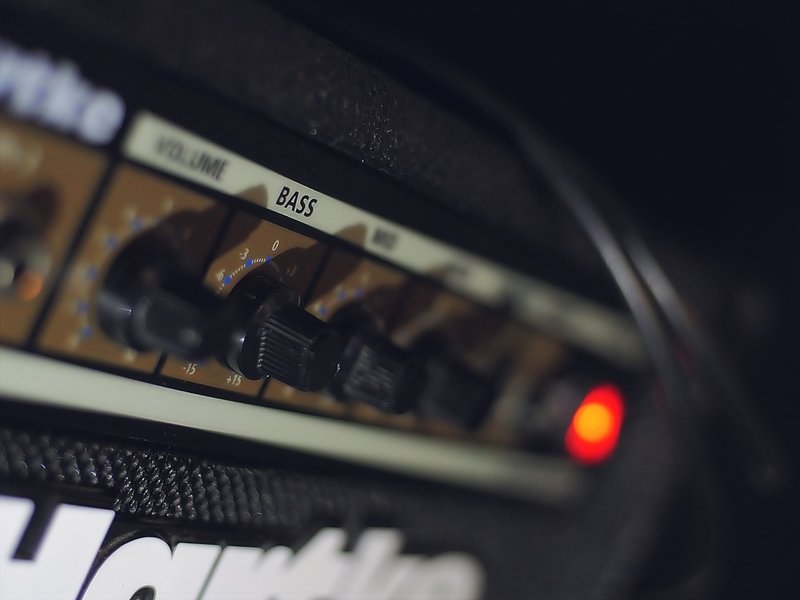
The biggest limitation is that a bass amp may produce bass guitar tone, not neutral subwoofer output.
Its tone controls may boost a broad range of bass and low-mid frequencies. That can make a bass guitar sound full, but it can make recorded music muddy. A dedicated subwoofer usually works with the main speakers through a crossover to reduce this overlap.
Other limitations include:
- Limited output below about 40 Hz, depending on the model
- Uneven frequency response
- No low-pass filter
- No high-pass output for the main speakers
- Less protection against deep bass signals
- Uneven bass across a room
- Increased distortion at high volume
- Possible overheating during long playback
- A speaker that is not rated for full-range program material
Do not solve weak bass by turning every control to maximum. Excessive bass boost can make the amplifier clip or force the speaker beyond its safe range.

Common mistakes to avoid
Mistake 1: Assuming every bass amp is a subwoofer
A bass amp is built around an instrument. Its speaker may not be designed for the deep, sustained content found in electronic music or movie soundtracks.
Mistake 2: Using a bass amp head without a cabinet
An amp head needs the correct speaker load. Running some heads without a connected speaker can cause damage, although the exact risk depends on the amplifier design.
Follow the manufacturer’s instructions for speaker impedance and connection.
Mistake 3: Ignoring impedance
Impedance is the electrical load presented by a speaker. It is measured in ohms.
If a bass amp requires a minimum load, connecting a cabinet with lower impedance can cause excessive current and overheating. A higher impedance may reduce power, but the permitted range still depends on the amp.
Use only speaker cables for speaker outputs. Do not use a thin instrument cable for a high-power speaker connection.
Mistake 4: Connecting the wrong output
A DI output, line output, headphone output, and speaker output are not the same. Read the labels and manual before connecting equipment.
Mistake 5: Expecting room-wide bass
Low frequencies interact strongly with walls and room corners. One bass amp may sound loud in one spot and weak a few feet away. A dedicated subwoofer does not remove room problems, but a properly integrated system gives you more control.
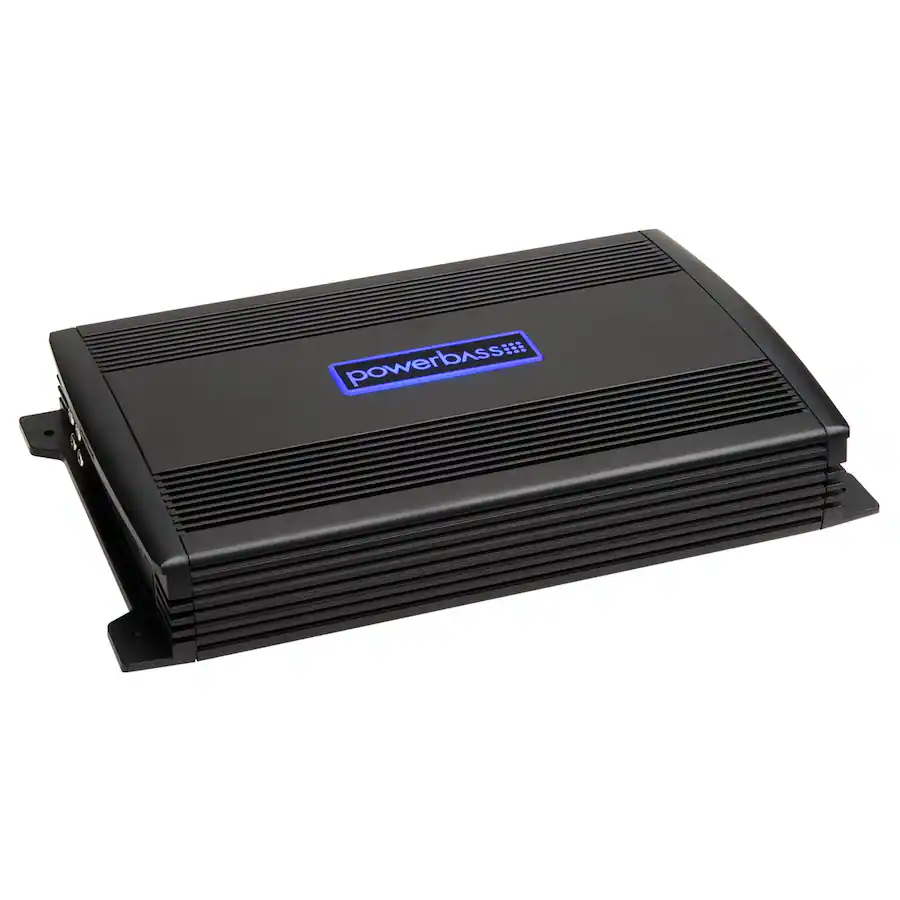
Bass amp or powered subwoofer: Which should you choose?
Choose a bass amp when you need:
- A temporary solution
- Bass-guitar monitoring
- Extra low end in a small practice room
- An inexpensive way to test a setup
- A sound with instrument-amp character
Choose a powered subwoofer when you need:
- Clean low bass for recorded music
- A PA or DJ system
- A crossover with main speakers
- High output for an audience
- Better protection and system integration
- Low-frequency reproduction in a large room
The deciding factor is not just loudness. It is whether the device can handle the signal, frequency range, duty cycle, and connection method required by the system.
If you need bass for a public event, a powered PA subwoofer is normally the safer and more predictable choice. If you only need a little extra bass at home or in a practice room, an existing bass combo may be adequate.

Key takeaways
- Yes, a bass amp can sometimes serve as a temporary subwoofer.
- A powered bass combo is required; an amp head alone cannot do the job.
- Bass amps are designed for bass guitar, not necessarily neutral music playback.
- Use a line-level or approved instrument-level connection.
- Never connect a speaker output to another device’s normal input.
- Check frequency response, power, impedance, and speaker limits.
- Reduce the volume if you hear distortion, rattling, or mechanical noise.
- Choose a powered subwoofer for PA, DJ, movie, outdoor, or high-volume use.
Frequently asked questions
Can I use a bass amp as a subwoofer for a home theater?
You can try it for informal use, but it is usually not the best choice. A bass amp may lack the low-pass crossover and deep-frequency response needed for home theater effects. It may also add a strong bass-guitar character to movie sound.
A powered home theater subwoofer is better suited to an LFE or subwoofer output.
Can I plug a subwoofer into a bass amp?
Usually, no—not directly through the bass amp’s speaker output. If the bass amp has a suitable line-level output, it may feed a powered subwoofer. The exact connection depends on the amp and subwoofer manuals.
Do not connect a passive subwoofer unless a properly matched power amplifier is included in the system.
Can I use a bass amp for a DJ setup?
It may work at low volume in a small room, but it is not a reliable replacement for a powered PA subwoofer. DJs often need sustained deep bass and high output. A bass amp may distort, overheat, or fail to provide even coverage.
Will a 15-inch bass amp be better than a 12-inch subwoofer?
Not necessarily. A 15-inch bass amp may move more air in some conditions, but speaker diameter alone does not determine subwoofer performance. Cabinet design, amplifier power, frequency response, excursion, and built-in processing also matter.
Can I use a guitar amp as a subwoofer?
A guitar amp is generally a poor choice. Guitar amps and guitar speakers often have limited low-frequency response and are voiced to shape the guitar signal. Excessive bass can produce distortion or stress the speaker.
A bass amp is more suitable than a guitar amp, but a powered subwoofer remains the proper tool for deep low-frequency playback.
Conclusion
You can use a bass amp as a subwoofer when the setup is small, temporary, and carefully connected. A powered bass combo may add useful low-end sound for practice, casual listening, or a small room.
It is not a direct replacement for a dedicated powered subwoofer. For live sound, DJ work, home theater, outdoor events, or high-volume playback, use a subwoofer designed for that role. Before connecting anything, check the exact manual, identify each input and output, confirm impedance requirements, and start at a low volume.

Everett Calloway is a consumer electronics writer and technology enthusiast at ElectroDoz. He enjoys exploring the latest gadgets, electronic devices, and innovative technologies that make everyday life easier. Everett focuses on creating helpful product reviews, detailed buying guides, practical how-to articles, and troubleshooting tips. His goal is to simplify complex technical information and help readers understand product features, compare their options, and make informed purchasing decisions. When he isn’t researching new electronics, he enjoys exploring emerging technology trends and discovering useful gadgets.